
I was at the Postdigital Backlash conference last Monday 22 and Tuesday 23 June 2026.
After twenty-four hours of return flights from Shanghai, I apparently considered this conference relevant enough to catch a Flixbus at 6:30 a.m. in Trieste on June 22 and reach my fellow scholars at 10:45. Too late for the keynote? Not at all. Thanks to the streaming, the unexpected working WiFi service on the bus and who knows what other force in the universe, I was happily catching up. The conference appears to have emerged, at least in part, from an ongoing conversation crystallised in the recent article Hijacking the Digital Backlash in Education by Forsler, Hayes, Jandrić and colleagues. While the concept of backlash is increasingly visible across educational debates, the conference promised something more nuanced than simple opposition to technology. It invited participants to think carefully about what kinds of resistance, discomfort, critique, and alternative futures are currently emerging in educational contexts.
When I finally arrived, I decided that the only way to stay awake and intellectually connected to the event was to write, as I used to do years ago. Just me, a keyboard, a notebook, and a collection of photographs. The conference felt like fresh air amid the digital fatigue I had accumulated during the last semester. Rather than attempting a comprehensive report, I found myself tracing my own positionality throughout the event. What follows is maybe the good travelog notes, but I hope my account captures some interesting insights from the conference.
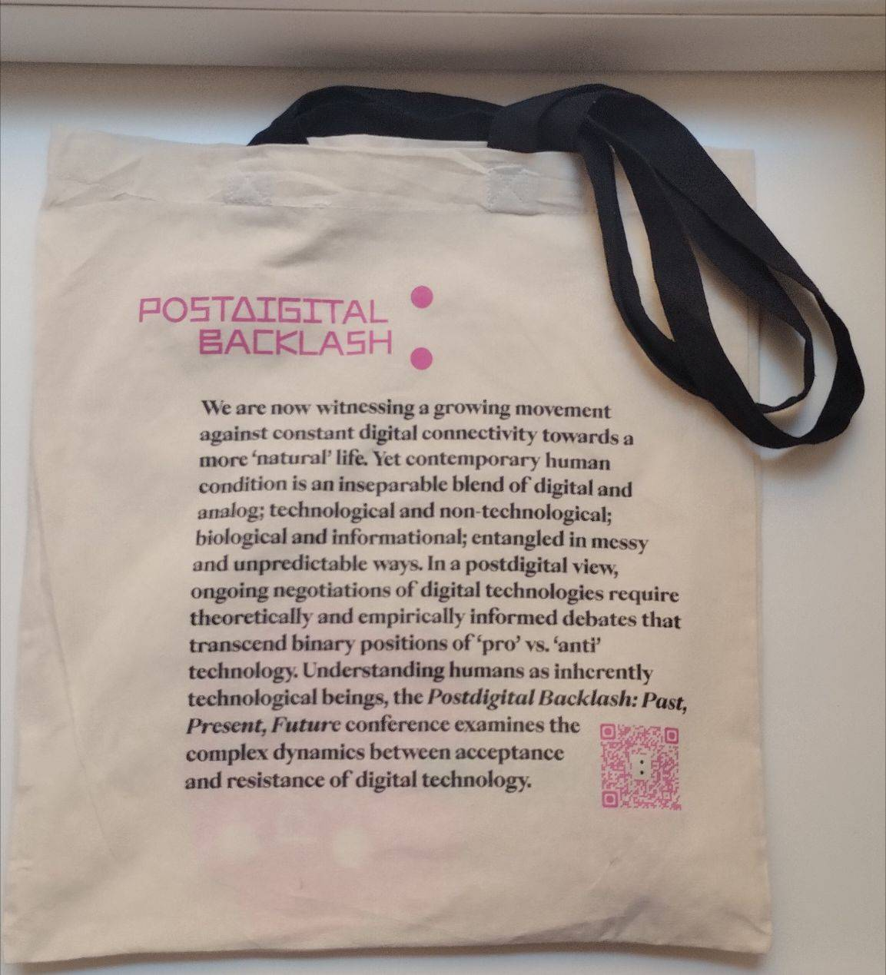
These are some of the ideas I carried home in my beautiful new bag.
Bliss
Before the first session, I posted on Bluesky that, like in the old days, I would be backchannelling the conference. The feeling was surprisingly emotional. There was a sense of relief in entering a space where different questions about educational technology could be asked. A space where technological hype was not the default language. A space willing to remain at the margins and cultivate them.
The feeling was, quite simply, bliss.
Bildung, beyond learnification
My attention was immediately captured by a session that promised an alternative perspective on what has become the learnification of everything. Increasingly, educational discourse seems trapped within the language of learning outcomes, competencies, skills, and measurable achievements. Educational experiences become valuable only insofar as they can be translated into performance indicators. The encounter between the postdigital and the concept of Bildung offered a powerful counterpoint. Bildung is not new to me. Having studied adult education and formazione in Italy, I am familiar with traditions that understand education as transformation rather than acquisition. Learning, in this perspective, is not what one accumulates. It is what one becomes through educational experience. Yet, viewed through postdigital lenses, Bildung opened new possibilities for thinking about educational processes as ongoing journeys of becoming. This way of thinking allows us to stay with discomfort, uncertainty, resistance, and transformation. It invites us to cultivate ourselves through the effort of becoming, through experiencing the world and through understanding (aligning with the hermeneutical perspective), doing so across the digital. However, I believe, this is not a digital to accelerate or to extract, it is a digital that encompasses sharing, creativity and also discomfort or selective detachment.
I found myself returning repeatedly to this idea throughout the conference.
Surveillance, Openness, and Exposure
I then decided to follow a session focused on surveillance. I entered with an uncomfortable feeling. Openness has been profoundly important in my professional life. The open web, open scholarship, and open educational practices gave me spaces in which to learn, engage with ideas, and develop a professional identity beyond the everyday limitations of working from the margins. For many years, these spaces of open expression and visibility were where I could become somebody. Yet, sitting in a session on surveillance, I found myself asking a difficult question. Wasn’t that same web also the infrastructure that exposed me? Wasn’t it the space that started capturing my data, tracing my activities, and rendering my professional life visible to platforms and corporations? While backchannelling the session, another apparently trivial question emerged. Should I take a photograph? It felt almost absurd. Here I was, attending a session dealing with resistance to surveillance, while considering whether I should document and share it through social media.
The question quickly became more complex. Publishing only the title of the session would still reveal identities, affiliations, intellectual positions, and fragments of a conversation that existed within a specific space and time. Some moments have a certain sacredness precisely because they remain ephemeral. They belong to memory rather than documentation. But many of this material was already published and visible.
At some point, I wrote in my notes what the first presenter -identity not revealed but anyone can de-anonymise it very quickly-: How can we reclaim pedagogy from the gaze?
The question stayed with me. The same presenter led debate gradually from surveillance itself to the conditions under which visibility becomes meaningful. The answer proposed by the presenters was not withdrawal but exposure, understood as a deliberate and situated act. Exposure becomes a practice of deciding what to reveal, what to conceal, and for which purposes. This distinction felt important.
Sharing is not the same as extraction. Visibility is not the same as surveillance, nor documentation is necessarily capture. For me, taking notes and posting reflections was not about producing content. It was about extending the conversation beyond the room and allowing others, who could not be physically present, to participate in it. Yet the tension remains unresolved, and perhaps it should remain unresolved. The pair openness-surveillance continues to generate ethical questions that cannot be settled once and for all. Every act of sharing requires asking again: what is being exposed, by whom, for whom, and at what cost?
Art, Resistance, and the Not-Yet
Art. That strange thing which is often marginalised in curricula, treated as expendable during budget cuts, and yet remains essential whenever societies need to imagine alternatives. I had the privilege to chairing the session, and therefore -thanks to a decent amount of caffein and the moral of the good chair avoiding the embarrassment of no questions at the end of a presentation- I paid close attention to the presentations. I could not have been more grateful for the opportunity. The four papers outstandingly explored entanglement, affection, emotions, care, and creative forms of resistance through artistic practice.
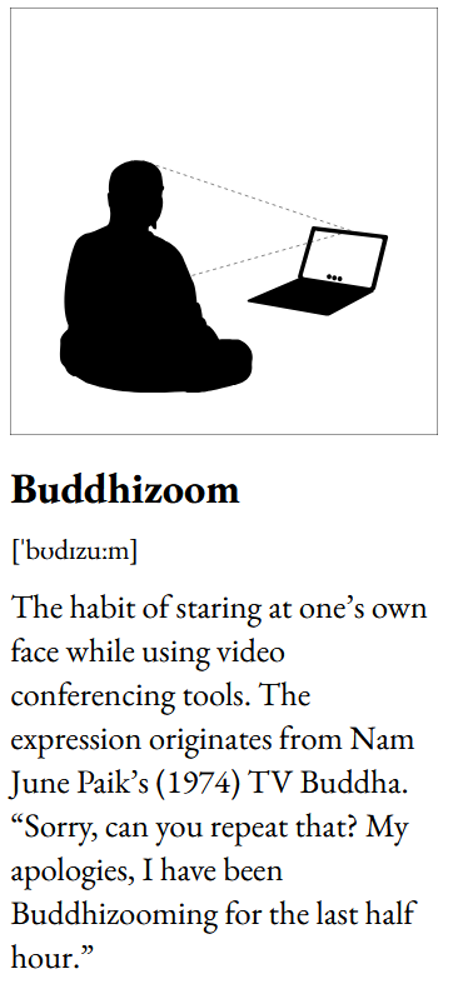
I left stunned by the clarity of the presentation on the Neologasmic idea and its playful resistance to technological hype. Through a number of initiatives like the Reverse Contradictionary –https://reverse-contradictionary.net/ – the presenter invited us to reflect about the creation of new words, exposing something fundamental about contemporary AI systems: their dependence on language that already exists. Generative AI is extraordinarily capable of recombining what has already been written, spoken, or recorded. Yet human beings retain the capacity to move language forward, generating words that have not yet been captured, indexed, or predicted. These words, I contend, inhabit a space of not-yetness. The presenter reminded me that the postdigital can be located precisely in these uncertain spaces, in the shifting boundaries of meaning and possibility. It engages with what remains unfinished, undefined, and imperfect. It embraces what in the postdigital reflection appears as epistemic messiness (as in Jandrić and Ford, 2022).
The discussion then moved toward a theme that resonates strongly with my own interests in professional identity and development. Several presenters reflected on the anger many artists feel regarding the extraction of creative labour into datasets that subsequently fuel generative AI systems. The technological imaginary often presents AI as creative, while obscuring the countless human creators whose work has made those outputs possible. And that is catered to us considering AI “a companion” a sort of humanized voice for us not to be alone anymore, not to fear the “horror vacui” in a blank page. As somebody in the session argued, presenting AI as a person can itself become a form of insult, collapsing distinctions between human experience and computational processes. At the same time, the session resisted simplistic narratives of refusal. Rejecting AI entirely can sometimes become a form of nostalgia for an imagined past in which creativity was pure, autonomous, and untouched by technological mediation. The challenge is therefore more complex than acceptance or rejection. Responding critically to AI does not necessarily require romanticising a pre-digital world. This led to an important reflection on backlash itself. Not all backlash is postdigital. Across the world, some reactions to AI and digital technologies are grounded primarily in refusal, nostalgia, or restoration. The postdigital backlash discussed throughout the session -and along the conference- was less concerned with returning to an earlier state and more interested in creating alternative ways of inhabiting technological realities.
Art becomes particularly valuable here because it renders these tensions visible. I jump for a second to another session where the colleague was presenting aerial acrobatics as a form of engaging with learning, displaying movements inside-outside the technological in the process of giving and receiving feedback on the movement. As somebody who loves contemporary dance as a form of expression, I thought that art languages offer us even the possibility of observing different levels of technological engagement and refusal along the creative process. In the case of aerial acrobacy and contemporary dance we still need a body that learn, exercise, remember and perform and that form of human toil cannot -yet- be replaced by AI. Through artistic practice -particularly the case of music- participants explored limitation, rematerialisation, slowness, care, and selective disengagement. Art created spaces in which uncertainty could be inhabited rather than resolved.
But, who knows why, in the schooling systems that need to be improved STEM is central, and arts are just a secondary concern.
More Food for Thought (and I Risk Gluttony)
Among the many ideas circulating throughout the conference, several stayed with me because they connected directly to my teaching and research interests.
One session explored the experiences of Generation Alpha and their ways of inhabiting increasingly layered technological environments. What struck me was the discussion of a paradox that many educators are beginning to recognise: children and young people are often overprotected in physical spaces and underprotected in digital ones. The discussion inevitably touched on Jonathan Haidt’s work and the broader debate about childhood, technology, and well-being. Yet what interested me most was not whether Haidt is entirely right or entirely wrong. Rather, it was the reminder that understanding young people’s relationships with technology requires listening to how they experience their worlds. As educators, we sometimes rush to implement active methodologies, innovative pedagogies, or AI-enhanced learning environments without first understanding the questions, concerns, desires, and struggles that students bring with them. If the university is to become a genuinely postdigital space, it cannot simply introduce new tools. It must engage with the lived experiences of those who inhabit it. Perhaps there is even a faint Humboldtian aspiration hidden here: not merely transmitting knowledge but building spaces where teachers and students can collectively make sense of technological transformations.
Another thread that captured my attention concerned postdigital research methods. I arrived at the conference already immersed in recent work by Fawns and colleagues on mapping and tracing the postdigital. Their argument that postdigital research requires flexibility, inventiveness, and principled rather than prescriptive approaches resonated strongly with me. I expected to encounter extensive discussions about methodological tensions between qualitative and quantitative approaches. I also anticipated more debate around the increasingly problematic incorporation of AI into research practices, particularly qualitative research, a topic I had recently explored with colleagues during the Arqus seminar in Portugal. Instead, I found myself preoccupied by a different question. What if the most significant methodological issue is not the method itself but the stability of the researcher’s gaze? Throughout much educational research, the researcher remains the one who asks permission, enters a field, observes, extracts data, analyses, and reports. Even participatory approaches often leave intact a certain architecture of observation. The researcher still arrives as the one who defines what counts as knowledge and how it should be produced. What would happen if we destabilised that position? What if researchers listened not only for answers but also for requests? What if they became participants in processes of transformation rather than observers of them? What if engagement emerged through invitation rather than extraction?
These reflections led me to a question that I suspect may have heuristic value for future methodological debates:
How might we rethink participation in postdigital research?
Will we continue to privilege digital traces because they are easy to collect? Will we continue lamenting the lack of openness among students and teachers who choose not to share their experiences with AI? Will we persist in framing people as sources of data rather than co-participants in processes of inquiry?
I intentionally use the passive voice when writing that students and teachers are “researched by us”. The expression makes me uncomfortable, and perhaps that discomfort is productive. Changing this gaze may be one of the most important challenges for postdigital research.
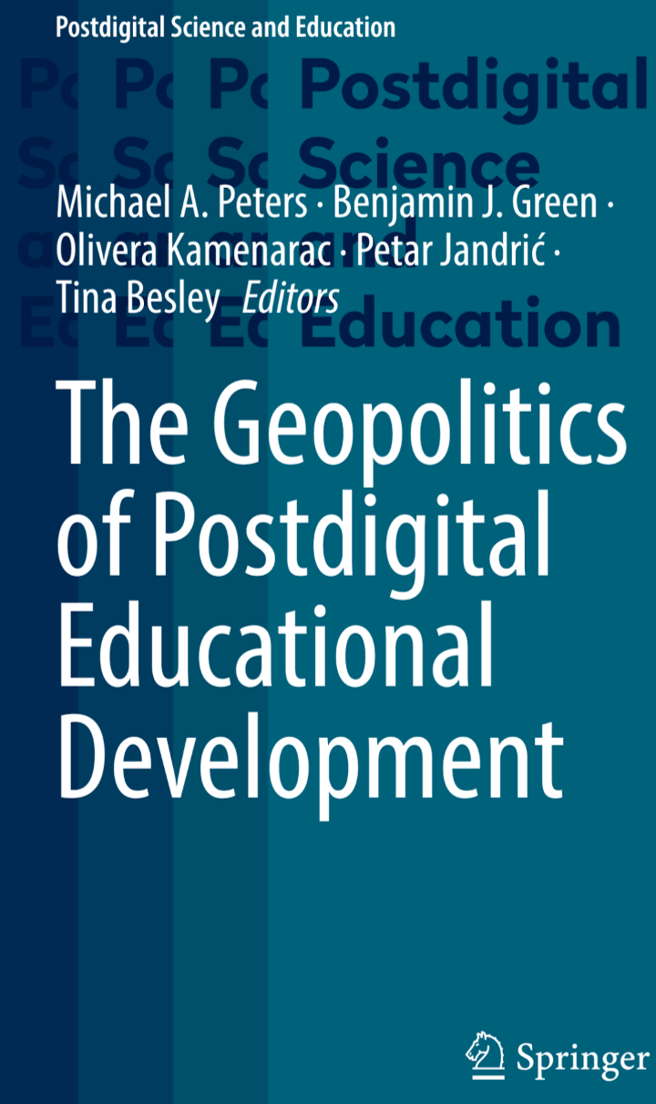
As if this was not enough intellectual provocation for a single
conference, I also stumbled upon a fascinating book on the Geopolitics
of postdigital development and I though that could be of help with my
obsession with epistemic injustice in research -which I’m unable to
translate in anything concrete by the moment, apart of some paragraphs
in some articles-. Yet another volume to add to the ever-expanding pile
of books that the overwhelmed academic promises to read.
I will be fortunate if I manage to read, process, and meaningfully engage with five percent of what this conference generated.
Connecting the Dots
As the conference progressed, individual sessions gradually began to connect with one another. I went back and forth with the keynotes. The first one, opened with a deceptively simple observation: backlash is not produced by algorithms. This struck me because public debates often frame backlash as a reaction to technology itself, as if technologies somehow generated opposition autonomously. Yet backlash is always embodied. It involves people placing themselves on the line, exposing vulnerabilities, frustrations, disagreements, and hopes. It is a messy response to messy conditions. The Keynote speaker, Jeremy Knox, warned against forms of explanation that individualise or medicalise the problem. If concerns about AI are reduced to cognitive decline, attention deficits, damaged brains, or personal failures of adaptation, we risk overlooking the political, economic, and cultural conditions that shape technological adoption in the first place. The issue here, as far as I grasped from Knox elegant argumentation, is what kinds of societies, institutions, and relationships are being produced through AI. The interesting concept of resonance was handled to the audience to get something practicable. I guess it is so because the term captures something that surfaced repeatedly throughout the conference. Resistance does not necessarily require withdrawal.
Critique does not necessarily require rejection. Resonance suggests collective engagement and amplification: “put the body on the line”.
As he spoke, I found myself thinking about affective infrastructures. Social media, for instance, are often blamed for social fragmentation, misinformation, and polarization. Yet the problem is not social media alone. The question is what kinds of relationships and communities become possible through them, as it was clear in the utopia of the pro-social web I so actively pursued some fifteen years ago.
This idea echoed the concern about increasingly complex forms of human-AI entanglement. My mind went to the concepts of maintenance, repair, and care work, for example in the teachers’ efforts to land AI -as recommended by several international bodies- at school. Emerging research on teachers’ interactions with generative AI demonstrates that technological adoption rarely reduces labour (See for example Marita Ljungqvist and colleagues work, or Flenadi’s and Farrow). Instead, it often creates new forms of invisible work: checking outputs, correcting errors, managing uncertainty, supporting colleagues, and caring for students navigating unfamiliar systems.
This observation resonated strongly with the argument Stephanie Martinic-Caneo and I developed in our own presentation on AI policy and academic subjectivity. Across the documents we analysed, academics increasingly appear as responsible supervisors of systems that remain fundamentally opaque. They are expected to collaborate with AI while simultaneously guaranteeing accountability, integrity, transparency, and ethical compliance. So, the machine acquires capabilities while humans inherit responsibilities.
The figure of the Centaur emerged from these reflections. Not the triumphant centaur celebrated in managerial discourses and hyped in mass media, but a more unstable and contradictory creature, permanently negotiating between technological augmentation and expanding obligations (see the post on the presentation). The backlash, therefore, cannot be reduced to concerns about cognitive effects or individual well-being. It must also be understood as a response to the political and cultural conditions that compel people to engage with AI in particular ways.
Stephanie & Juliana
Knox described this position as nuanced rather than oppositional. I found myself agreeing.
The most interesting forms of critique emerging throughout the conference were rarely anti-technology. Instead, they asked deeper questions: Who are we becoming through AI? Which forms of life are being enabled? Which are being constrained? What kinds of futures are becoming imaginable, and which are disappearing from view?
From Backlash to Hope
If Jeremy Knox helped frame backlash as a collective and political phenomenon, Teresa Cerrato-Pargman’s keynote offered a vocabulary for imagining what might come next. Her presentation centred practices of inhabiting technological worlds differently.
To begin, she introduced the practice of noticing. Noticing requires slowing down. It means discerning hidden connections, observing practices that often remain invisible, and attending to multiple perspectives before rushing toward solutions. It involves recognising care where dominant narratives see only efficiency, optimisation, or innovation. This idea resonated strongly with recent work on designing postdigital futures and with broader conversations throughout the conference. Again and again, participants returned to practices of care, maintenance, and relationality as sites of resistance. Teresa also invited us to think through experience itself, moving apart from treating technology as an abstract system. She drew attention to ways of knowing that emerge through making, experimenting, inhabiting, and feeling. Examples such as permacomputing, fungal computing (I think to the idea of micellium in Lynn Margulis), and community-based technological initiatives demonstrated how alternative technological imaginaries are already being enacted in practice. Particularly powerful was her engagement with Arturo Escobar’s notion of sentipensar or feeling-thinking. The concept challenges the separation between cognition and emotion, analysis and affection. It proposes ways of inhabiting technological realities that move beyond colonial and capitalist logics while remaining grounded in collective experience. The examples she discussed, including initiatives from Latin America, reminded me that alternative digital futures are not merely theoretical possibilities. They are already being constructed through everyday practices of solidarity, care, and technological sovereignty.
What fascinated me most was how this perspective shifts attention away from individual performance. Much contemporary discourse around AI remains focused on what individuals should know, learn, master, or optimise. Teresa’s intervention suggested that meaningful technological futures may depend less on individual competence and more on our capacity to cultivate generous and generative relations with others. From this perspective, the challenge is moving from the Technology-enhanced Banking Model (in Paulo Freire’s critique), towards what she called a co-stewardship of technology. This movement beyond the banking model of education, even in its technology-enhanced versions, felt particularly significant. Instead of consuming technologies or merely adapting to them, we are invited to participate in shaping them collectively, as I expressed with my Latin American colleagues Mariana Ferrarelli and Nohemi Lugo here.
The conference concluded, for me, with another powerful intervention from Mark Coeckelberg, based on -among other papers and books cited- this relevant work from 2023. He reflected on how AI contributes to the formation of epistemic bubbles and how these bubbles can gradually erode deeper understandings of democracy itself. The question that remained with me was disarmingly simple. If democratic institutions are weakened through widespread forms of AI-mediated knowledge production, what exactly are we adopting when we adopt AI? And perhaps more importantly: can alternative forms of AI be imagined and developed on democratic foundations, oriented toward the common good rather than extraction, optimisation, and control?
These questions remain open.
Thankfully.
Conclusions
I left the conference tired, overwhelmed, and strangely hopeful. The two days generated more ideas than I can realistically process in the coming months. They offered conceptual tools, provocations, methodological questions, and, perhaps most importantly, a sense of intellectual companionship in a moment when educational debates around AI often feel trapped between enthusiasm and despair. I returned home -always in my impopular Flixbus crossing the Croatian fields with 40* Celsius around- thinking about alternative educational technology practices as ethical and political endeavours. Ways of resisting the temptation of the contemplative life and embracing instead the vita active with the conditions shaping education, research, and society.
I am particularly interested, indeed, in exploring well-being as a condition for educational research, not as an individual condition or state but as a postdigital endeavour grounded in relationships, care, and collective responsibility. I am also increasingly convinced that educational research needs to engage more seriously with epistemic traditions beyond the dominant Western canon, opening space for other ways of knowing, feeling, and inhabiting technological worlds. I think now to the many Aussies and Canadians expressing they come from the ancestors lands -what I believe it is an excellent practice to begin- but with all of us just stopping (our minds) there. Seeing citations from the Global South is still unusual.
That has to do, in my view, with epistemic messiness. In a moment marked by distrust, dissonance, uncertainty, mental health struggles, political polarisation, and competing claims to truth, messiness may be one of the most honest starting points available to us. As Teresa purported, considering fragility not as weakness but as a resource for thinking and acting differently. I find this idea increasingly compelling.
There is much here that I want to bring back to my students, to my research methods courses, and to the PhD programme. Questions about the hypes and the backlashes, the forwardlash and the utopia we wish to cultivate. From recovering the hope lost in the era of abundance, boredom and cognitive fatigue. So many take aways to work with my students and colleagues and working/learning spaces, if somebody else was interested in listening at my claims and ideas.
For sure, the machine will pay attention and my ideas will be -as those of many others in the open space of the web-, enhanced, if not listened. Which, admittedly, is perhaps not the most reassuring conclusion to a conference on postdigital backlash I can imagine. But I stay with my discomfort while I wait some human expressions about these shared ideas.

